Our course will help you develop the knowledge, skills and behaviours required to become a successful engineer in today’s rapidly evolving industry, with expertise in both mechanical and electrical engineering.
AAQ Engineering is a single subject that enables students to study the principles and applications of engineering, including the fundamental mechanical, electrical/electronic and mathematical principles, engineering sectors, engineering materials, engineering processes and emerging technologies. Students will also develop important engineering design and project management skills while creating solutions to engineering challenges and problems. The qualification is designed to complement learning in A Level STEM subjects, such as A Level Mathematics and A Level Physics. It is intended for students who wish to progress to higher education as a pathway to employment.
Sixth Form Tours
What will my day look like?
Explore example timetableCourse Information
Four GCSEs at grades 9-4, or a Merit in a full Level 2 BTEC Diploma.
Grade 4 or above in GCSE English, Maths and Science is preferred.
If you want to combine your AAQs with an A Level, you will need to meet the entry criteria for that A Level too.
This qualification is equivalent in size to one A Level and is designed to be studied alongside other Level 3 qualifications. Assessment is a combination of external assessments and internally assessed coursework projects. Students complete four mandatory units: two externally assessed units and two internally assessed units.
- Engineering Mathematics
- Mechanical Principles
- Electrical and Electronic Principles
- Engineering Calculations and Problem Solving
- Engineering Materials and Processes
- Modern Engineering Technologies
- Sustainability in Engineering
- Solving Engineering Problems
- Computer-Aided Design (CAD)
- 2D Technical Drawings
- 3D Modelling
The qualification combines engineering theory with applied project work. Two units focus on engineering principles and applications, while two units require practical design and project-based work using industry-standard methods and CAD software. Approximately 50% practical / 50% theory.
The final year of the course can feed directly into the Higher Education Engineering programme at the University of Suffolk at East Coast College, or you can progress to another university.
You can also progress into an apprenticeship or employment in careers such as electrical engineering, mechanical engineering, project engineering, chemical engineering, design engineering or maintenance engineering.
Our course will help you develop the knowledge, skills and behaviours required to
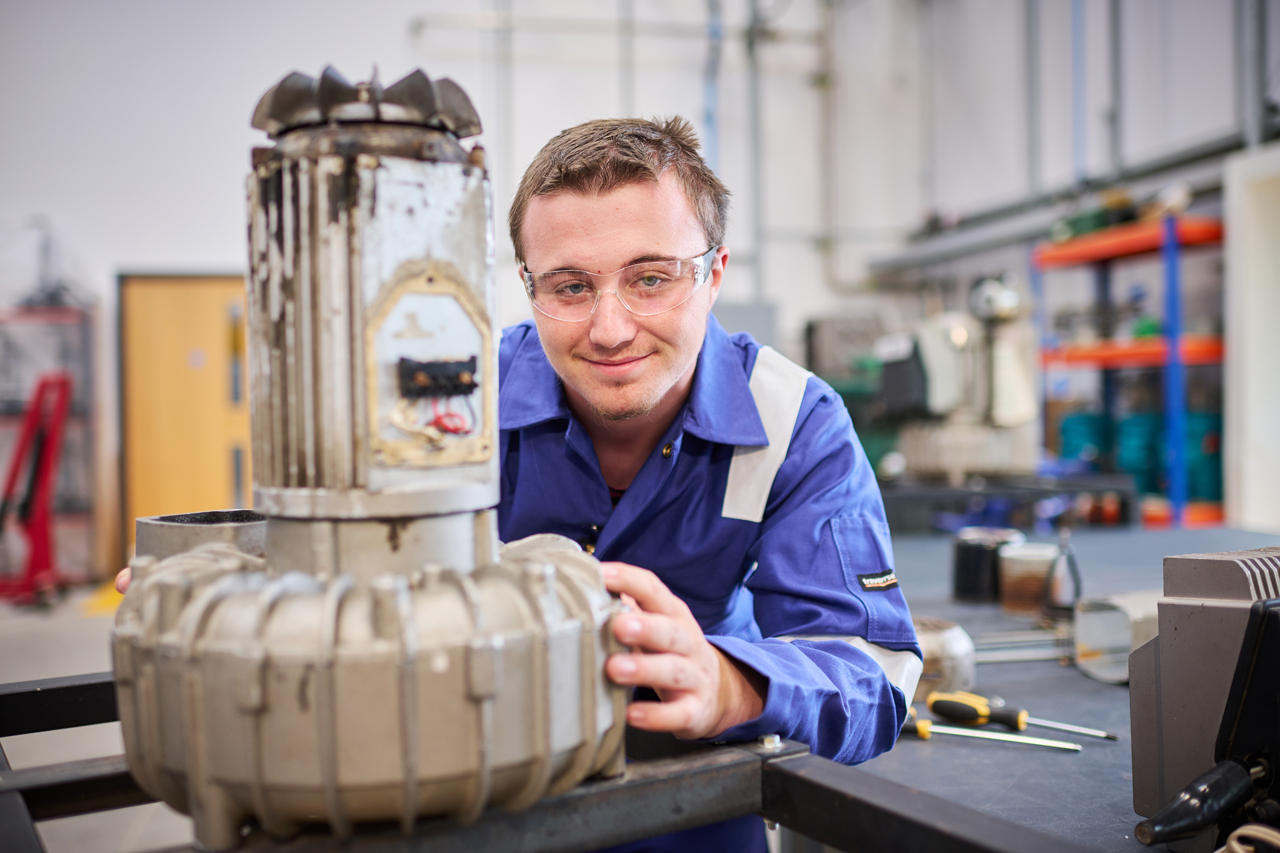
become a successful engineer in today’s rapidly evolving industry, with expertise in both mechanical and electrical engineering. You may get the chance to visit sites such as Bacton Gas Terminal and Sizewell nuclear power station. Away from the practical elements, you will develop your general knowledge of maths and engineering through classroom sessions. Access industry-standard facilities and equipment in our £11.3m Energy Skills Centre.