A Level Art, Craft and Design is a diverse, creative subject that has transferable skills with other creative arts-based courses, such as Graphic Communication, Photography, Media Studies and Digital Games Production.
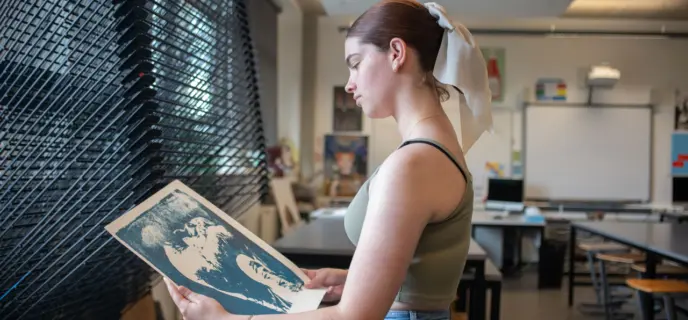
As an artist, you will have the chance to work using a wide range of media and materials, covering many creative disciplines including drawing, painting, printmaking, digital drawing, image manipulation, mark making, collage, 3D construction and photography.
In previous years, students have had the opportunity to enter competitions, been selected to display their work at local universities and in preparation for their next steps, have visited arts universities.
Sixth Form Tours
What will my day look like?
Explore example timetableCourse Information
At least five GCSEs at grades 9-4 in one sitting. An average GCSE score of 5 or more is preferred. GCSE English and Maths at grade 4. Grade 5+ in an Art-related GCSE and a successful portfolio.
Assessment is through practical coursework and an externally set task. There are no written examinations. Component 1 (Personal Investigation) is worth 60% of the A Level and includes a practical portfolio with a written related study of 1,000 to 3,000 words. Component 2 (Externally Set Task) is worth 40% and culminates in a 15-hour supervised practical exam.
- Practical Portfolio
- Independent Project
- Written Study (1,000 to 3,000 words)
- Fine Art Practice
- Drawing and Painting
- Mixed Media
- Printmaking
- Sculpture and Installation
- Critical and Contextual Studies
Art and Design is an excellent course if you want to study a degree in subjects such as fine art, games design, concept art, prop making, theatre design, architecture, graphic design, illustration, 3D design, fashion and textiles, photography and marketing.
Want to stay local? The University of Suffolk at East Coast College offers degree courses such as Creative Arts Practice and Visual Art, allowing you to gain a degree on your doorstep.
The skills you gain will prepare you for a range of creative careers and enhance your ability to think creatively and innovatively.
Careers include architecture, printmaking, graphic design, illustration, interior design, photography, tattoo artistry, ceramics, website design, and even working as a self-employed artist.
The course is predominantly studio-based practical work with a supporting written element. Approximately 85% practical / 15% theory and written research. Assessment weighting is 60% Personal Investigation and 40% Externally Set Task.
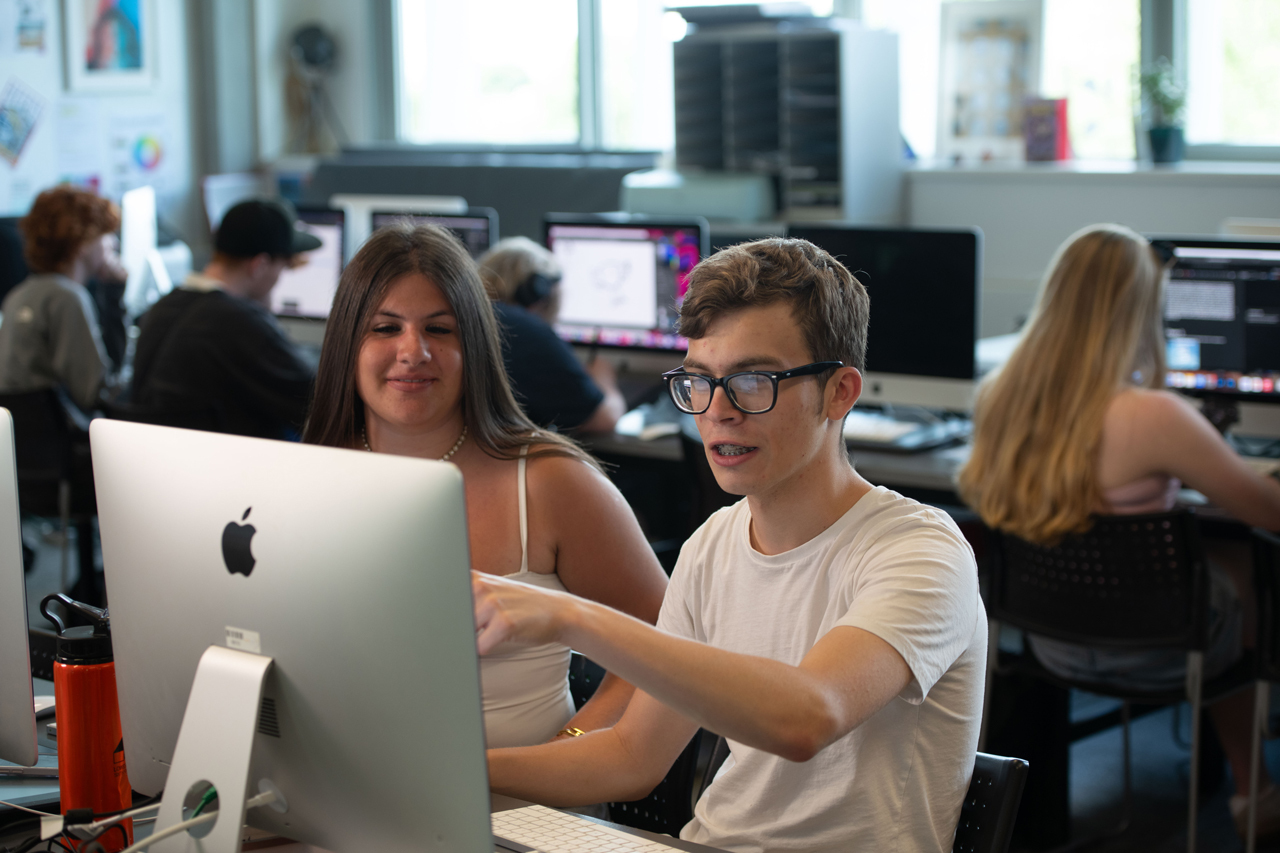
You will be taught by professional tutors in a purpose-built art department, complete with a photographic studio, Mac suite and Nikon DSLR cameras, and you will be given a personal Adobe Creative Cloud licence.
We offer exciting trips to national art galleries. In addition, we run a programme of visits from artists and arts organisations, giving students valuable connections and real-world contacts in the arts.
Your course will end with an exhibition, which will look fantastic on your CV and give you the opportunity to celebrate all the brilliant work you have created with your classmates.
Students studying A Level Art and Design courses first develop their drawing and sketching skills. They then use these skills and a range of mixed media to experiment and develop their independence and personal creative style (Ofsted, February 2025).