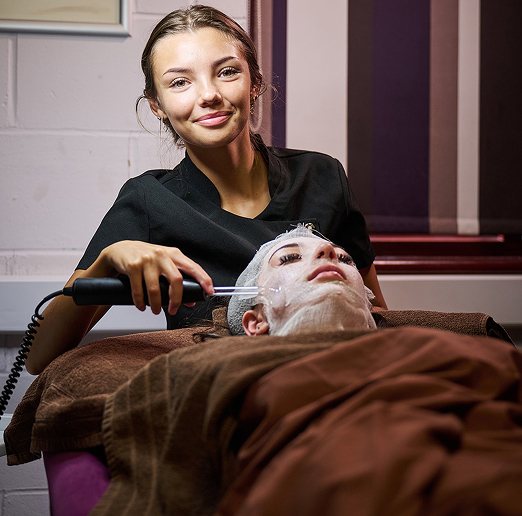
Applied Science is highly relevant for students aspiring to careers in medicine, biomedical science, healthcare, and related STEM fields. It supports the development of critical thinking, problem-solving, and investigative skills, all of which are essential for progression to university study or higher-level apprenticeships.
Applied Science at Lowestoft Sixth Form gives students a practical understanding of how scientific principles are used in real-world industries, particularly healthcare and biomedical science. Studying the Pearson AAQ Applied Science (Level 3), learners develop strong interdisciplinary knowledge across Biology, Chemistry and Physics, alongside essential laboratory and analytical skills. The course explores key scientific applications, including biomedical chemistry, medical imaging technologies, and safe, ethical laboratory practice. Teaching takes place in modern STEM laboratories, where students carry out hands‑on experiments using specialist equipment and real industry techniques. This programme is ideal for motivated learners who want to see how science shapes healthcare, medical innovation and wider society, while preparing for university study and a wide range of STEM careers.
Sixth Form Tours
What will my day look like?
Explore example timetableCourse Information
Four GCSEs at grades 9-4, or a Merit in a full Level 2 BTEC Diploma.
Grade 4 or above in GCSE English and Maths is preferred.
If you want to combine your AAQs with an A Level, you will need to meet the entry criteria for that A Level too.
The qualification is broadly equivalent in size to one A Level and can be studied over one or two years. Assessment is through a combination of externally assessed units and internally assessed coursework. You will complete mandatory units in Biology, Chemistry, Physics and Practical Scientific Procedures, plus an optional unit. Three units are externally assessed by Pearson and two units are internally assessed and externally moderated.
- Principles and Applications of Chemistry
- Atomic Structure
- Bonding
- The Periodic Table
- Chemical Reactions and Analysis
- Chromatography
- Colorimetry
- Electrical Circuit Investigations
- Applications of Physics in Technology and Engineering
- ElectricityÂ
- Laboratory Skills
- Scientific Investigation Skills
Applied Science combines substantial practical laboratory work with scientific theory. Approximately 50% practical/coursework and 50% externally assessed theory. Practical skills are developed and assessed through laboratory investigations, scientific techniques and coursework assignments throughout the course.
This programme opens doors to a wide range of university degrees, including: Biomedical Science, Biochemistry and Genetics, Medical Sciences, Radiography and Paramedic Science, Nursing, Midwifery and Public Health.
It also supports progression into higher apprenticeships in scientific and healthcare fields.
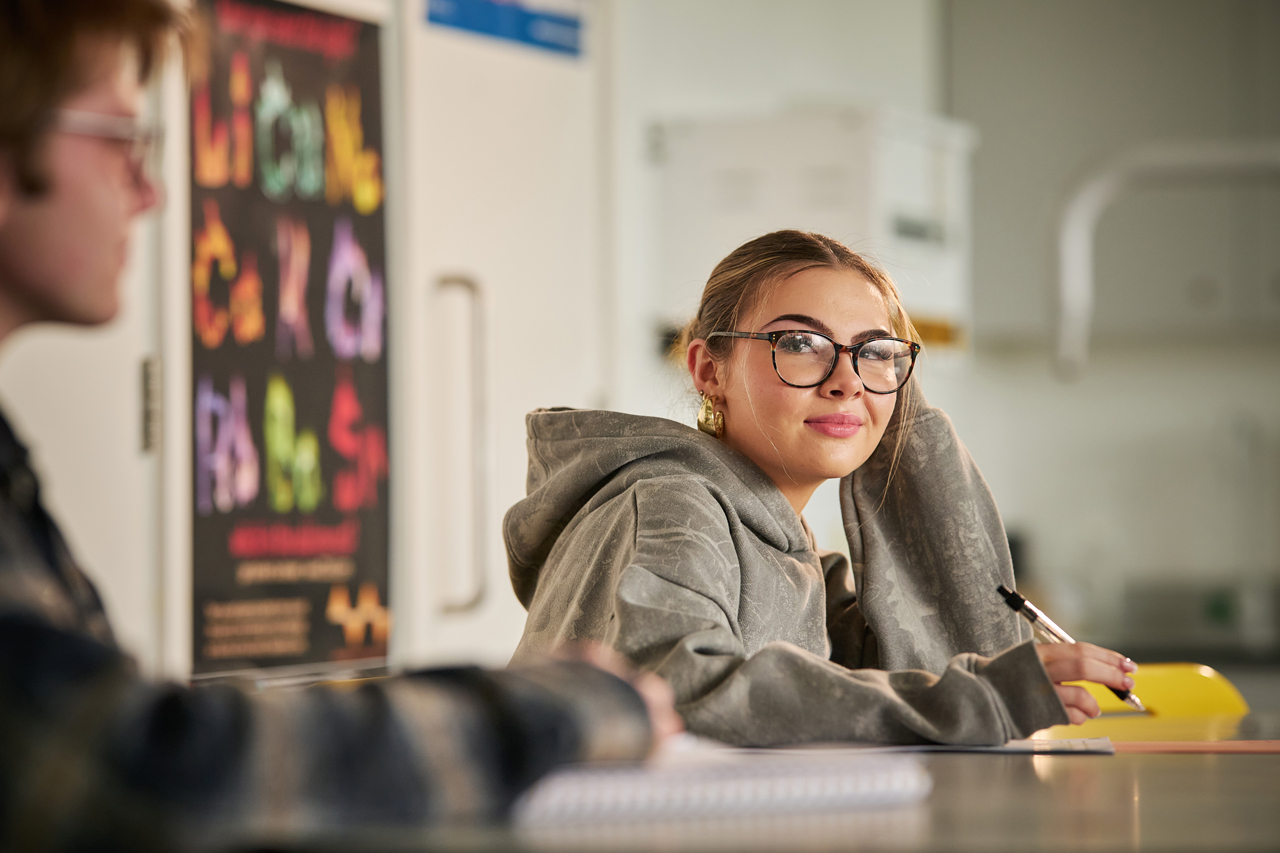
Study in modern, well-equipped science laboratories. Practical learning with specialist equipment will allow you to develop confidence when carrying out investigations that mirror real scientific practice.